Saving money sounds simple.
Until your income changes every day.
One day you may have a strong earning day. The next day could be slow. Then the vehicle needs servicing, fuel prices change and a family expense suddenly appears.
For auto drivers, cab drivers and gig workers, the challenge is not always earning more.
It is making sure some of what you earn actually stays with you.
Start With a Simple Habit
Instead of thinking:
"I will save whatever is left at the end of the month."
Try:
"I will save a small amount whenever I earn."
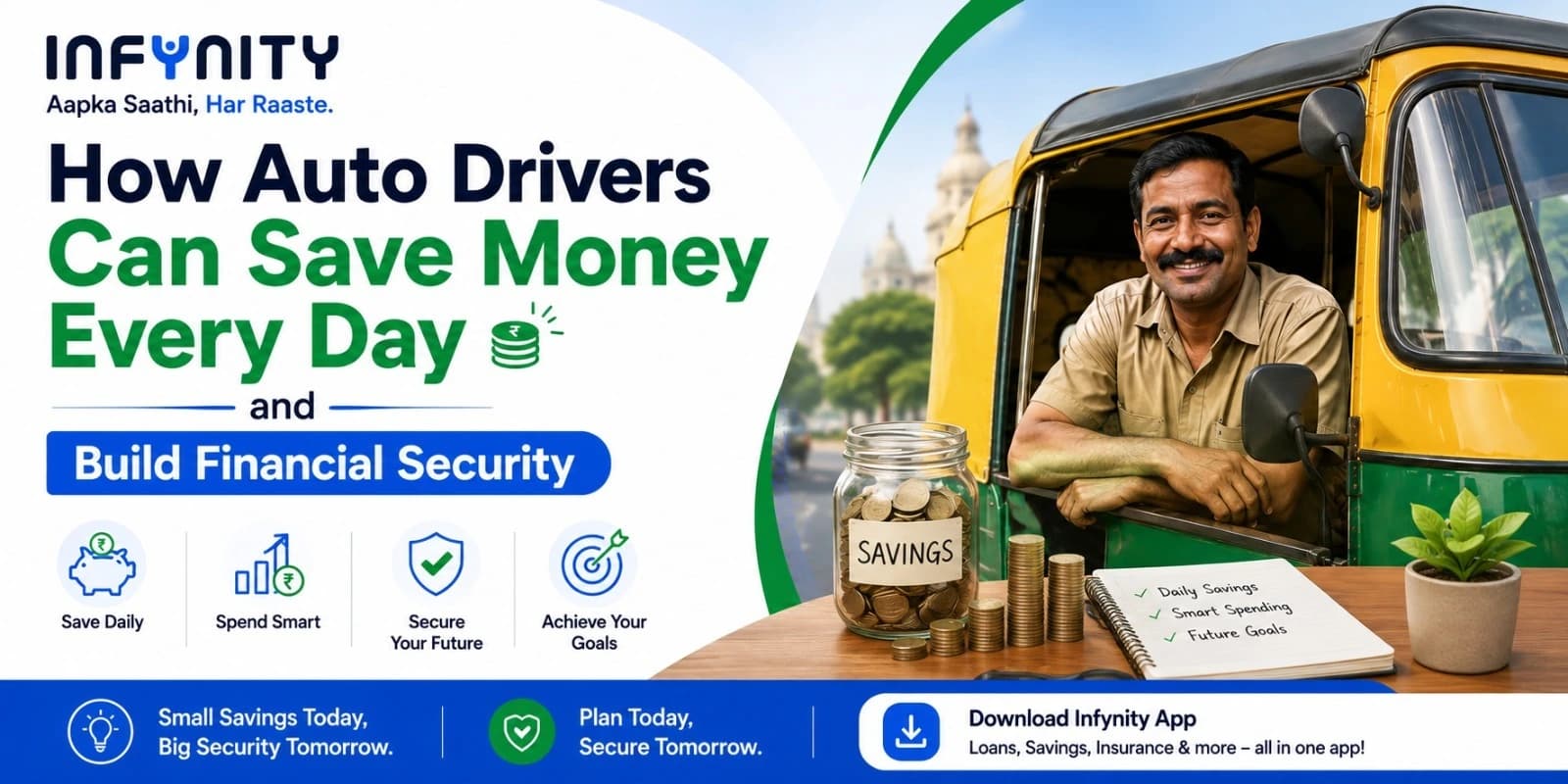
For example, saving ₹100 a day for 30 days gives you ₹3,000.
Over a year, that becomes ₹36,000 before considering any interest or investment returns.
The amount is less important than the habit.
Start with an amount you can realistically maintain.
Build an Emergency Fund
Before thinking about long term investments, create a financial cushion.
An emergency fund is money kept aside for situations you did not plan for.
It could help with a major vehicle repair, medical expense, temporary loss of income or urgent family need.
The amount you need depends on your household expenses and financial responsibilities.
You do not have to build it overnight.
Start small and keep adding to it.
Separate Savings From Daily Spending
This is one of the simplest changes you can make.
If your savings sit in the same pool of money you use for fuel, food and everyday expenses, it is easy to spend them.
Create a separate place for your savings and treat it as money with a purpose.
Your emergency fund is not your shopping budget.
Your vehicle repair fund is not your entertainment budget.
Your future fund is not today's spending money.
Give every rupee a job.
Save for Your Vehicle Too
For a professional driver, vehicle maintenance is part of financial planning.
Tyres, servicing, repairs, battery replacement, insurance and other costs are not really surprises. They are expenses that eventually arrive.
Setting aside a small amount regularly for vehicle maintenance can prevent one large repair bill from destroying your monthly budget.
What About SIPs?
Once your emergency savings are in place, you can start exploring investments for long term goals.
A Systematic Investment Plan, or SIP, allows an investor to invest a fixed amount regularly into a mutual fund scheme.
But remember one important thing:
A SIP is not a guaranteed return product.
Mutual fund investments carry market risk, and SEBI's Riskometer helps investors understand the risk level associated with mutual fund schemes.
So don't invest because someone promises you a fixed return.
Choose investments based on your goal, time horizon and ability to handle risk.
Saving and Investing Are Not the Same
This distinction is important.
Savings are generally for money you may need soon.
Investments are generally for longer term goals and can involve market risk.
Your emergency money should not automatically be invested in something that can fluctuate significantly in value.
First create financial stability.
Then think about growth.
What About Retirement?
Retirement can feel far away when your priority is today's income.
But starting early can make the process easier.
The National Pension System is one option eligible Indian citizens can explore for retirement planning. PFRDA currently states that eligible citizens can voluntarily subscribe between the ages of 18 and 85, subject to applicable conditions.
You do not need to decide on a retirement product simply because it is popular.
Understand the rules, costs, investment choices and withdrawal conditions before committing your money.
A Simple Money System for Drivers
Think of your income in four buckets:
- Daily expenses — fuel, food and household needs.
- Emergency savings — money for genuine unexpected expenses.
- Vehicle fund — money for maintenance, insurance and repairs.
- Future goals — long term savings and suitable investments.
The exact amount going into each bucket depends on your income.
The important part is creating the habit.
Avoid the Quick Money Trap
If someone promises you high returns with no risk, be careful.
SEBI advises investors to understand the risk and return profile of an investment, read documents carefully and avoid schemes promising assured or exaggerated returns.
There is no shortcut that replaces disciplined saving.
For most drivers, a boring financial system that works is better than an exciting investment story that does not.
How Infynity Can Help
Saving becomes easier when financial services are easier to discover and manage.
Infynity is built as a broader driver focused ecosystem with services around savings, financial support, rewards and other everyday driver needs.
The idea is simple.
Earn. Save. Protect. Plan ahead.
Drivers can explore relevant services through Infynity while making decisions based on their own financial needs and eligibility.
Frequently Asked Questions
How can an auto driver save money every day?
Choose a fixed amount from your daily earnings and save it consistently before spending the rest.
Is ₹100 a day enough to start saving?
Yes, if it fits your income and expenses. ₹100 a day adds up to ₹3,000 in a 30 day month and ₹36,000 over a year.
How much should a driver keep as an emergency fund?
There is no single amount for everyone. Start with a realistic target based on essential household expenses and gradually build it.
Should drivers save or invest?
Both can have a role. Savings are useful for short term needs and emergencies, while investments can be considered for suitable long term goals.
Is SIP safe?
A SIP is a method of investing in mutual funds. It does not remove market risk. Investors should understand the risk level of the chosen fund before investing.
Can drivers plan for retirement?
Yes. Drivers can explore retirement options such as NPS and other suitable long term investments based on eligibility, goals and risk tolerance.
Final Word
You do not need a huge salary to start building better money habits.
You need a system.
Save something every day. Build an emergency fund. Prepare for vehicle expenses. Protect yourself with insurance. Then think about long term investing.
Small amounts may look insignificant today.
But consistency is what turns income into financial security.
Important: Mutual fund investments are subject to market risk. Insurance, investment and pension products depend on the specific product terms and eligibility criteria.
Infynity does not provide investment advice or guarantee returns; eligibility and terms are determined by the respective financial partner.